What a Balcony Can Actually Feed You
Container growing fails on honest arithmetic, not skill. The two numbers that decide what a small space produces, and which crops repay the pot.
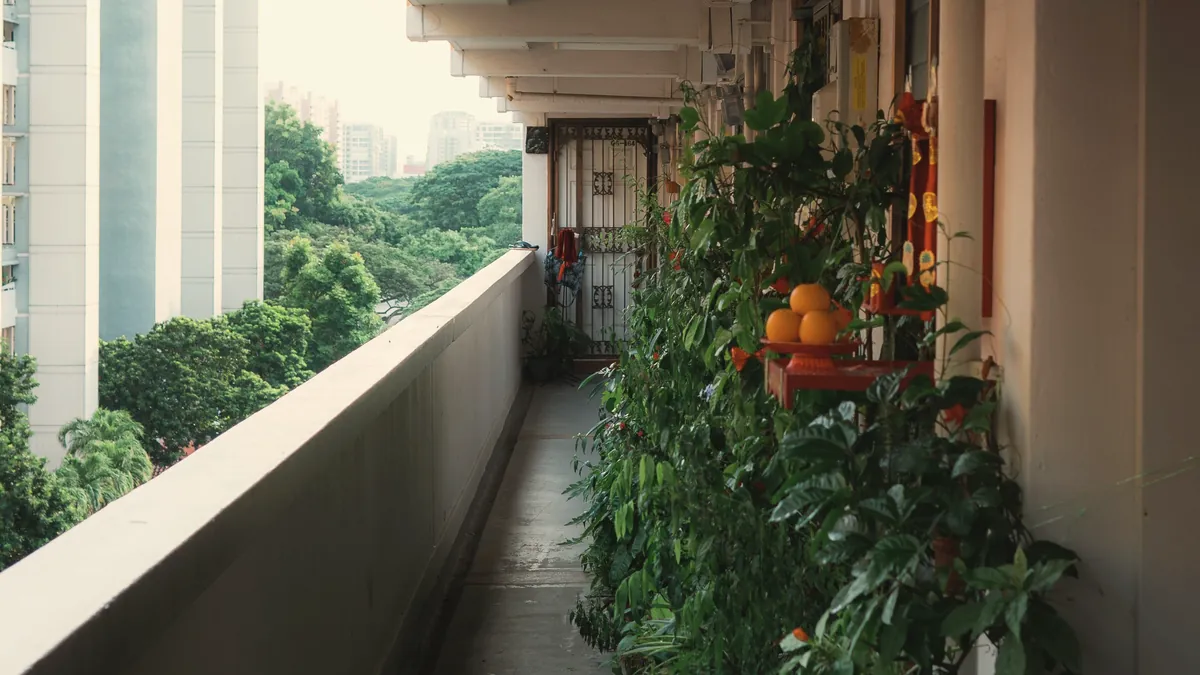
Balcony growing gets written about in two registers, and both are unhelpful. One promises near self-sufficiency from four pots. The other treats it as decorative, a hobby that happens to produce a garnish.
The truth is arithmetic, and the arithmetic is more encouraging than the second register and much less than the first.
Start with the two numbers that decide everything
Sun hours, measured. Not estimated. Go out at 8, 10, 12, 2, 4 and 6 on a clear day and write down whether each spot is in direct sun. Balconies are shaded by railings, by the wall above, by the building opposite, at hours you would not predict, and the total is very often two or three hours short of what people assume.
Six-plus hours means tomatoes, peppers, beans and squash are on the table. Four to six means leaves, herbs and roots. Under four is a herb and salad space, and there is no amount of feeding that changes that.
Volume of soil. This is the constraint that actually kills container gardens in July. A pot has a fixed water reservoir, and a hot windy day empties a small one faster than any watering routine can keep up with. Five gallons is a working minimum for a single tomato; two or three is enough for lettuce or herbs. Every step up in pot size buys you margin on the day you are away.
What repays the pot, and what doesn’t
The honest sorting, by yield per unit of space and effort:
Worth every inch. Herbs — you cut them constantly, they are expensive to buy, and they are perfectly happy in small pots. Salad leaves, cut-and-come-again, which produce for weeks from one sowing. Cherry tomatoes, which crop heavily and forgive container conditions far better than large-fruited types.
Worth it if you have the sun and the pot. Peppers and chillies, which are compact and productive. Bush beans. Chard, which crops for months from a single planting.
Rarely worth it. Sweetcorn, which needs a block for pollination and gives a couple of cobs per plant. Maincrop potatoes, cheap to buy and space-hungry. Winter squash, which will happily take over the whole balcony for two fruit. Brassicas, which occupy a large pot for a very long season.
None of that is a rule. It is a starting point you should overturn with your own results — which requires having them written down.
The record that settles the argument
One page a season, and by year two you stop guessing.
Per container
- What is in it, pot size, and where it sits
- Measured sun hours for that spot
- Sown or planted date, first harvest date, last harvest date
- Roughly what it produced — “salad twice a week for six weeks” is a perfectly good unit
- Watering burden in high summer — once a day, twice, unmanageable
That last line is the one nobody writes and everybody needs. A crop that produced well but required watering twice daily in August is not a success if you go away in August. Yield per pot is only half the question; yield per unit of attention is the other half, and it is what decides whether you keep doing this.
Balcony Bloom is written specifically for growing in containers and small spaces — per-container pages with the sun, pot size, watering and harvest columns, plus the season planner. The free Frost Date & Zone Chart matters more here than in a garden, because a warm wall can shift your effective dates by a fortnight in either direction.
The realistic answer
A well-run balcony with decent sun will supply a household’s herbs almost entirely, its salad through the warm months, and a real share of its summer tomatoes. It will not supply staples, and anyone telling you otherwise is selling something.
That is not a small thing. It is the difference between buying herbs in plastic packets all year and cutting them at the door — which, per pound, is one of the best returns in food growing.
This week
Measure the sun before you buy anything else. Six readings across one clear day.
Then buy fewer, larger pots than you were planning to. Every balcony gardener I know arrived at that conclusion eventually; the record just gets you there a year sooner.
— Hadley
Common questions
- How big should a container be for vegetables?
- Bigger than most guides suggest. Five gallons is a working minimum for a tomato or pepper; leafy crops manage in two or three. Small pots dry out faster than you can keep up with in midsummer.
- How much sun does a balcony need?
- Six hours or more for fruiting crops such as tomatoes and peppers; four is enough for leaves and herbs. Measure it across a real day rather than estimating — balconies are shaded at times you would not guess.
- Can you actually feed yourself from a balcony?
- Not staples, realistically. But a balcony can supply a household's salad, herbs and a meaningful share of its summer tomatoes, which is a real contribution rather than a token one.

Biochar 101: From Burn Pile to Living Soil
What biochar actually is, why raw char can backfire, and the charge-then-bury protocol that turns a burn pile into a decade of soil improvement.
Read the article →
The Winter Storm Kit Checklist (and the Three Things That Expired Since Last Year)
A winter kit built once is a kit that quietly goes stale. The checklist for a house kit, a car kit and a power-out box — and the three items that are almost always expired by now.
Read the article →
Seed Saving and the Inventory You Do in October
Saving seed is the easy half. Knowing what you have, and whether it will still come up, is what decides next spring's order.
Read the article →