The Spring Kindling Schedule, Written Down
A rabbitry runs on dates: bred, palpated, nest box in, kindled, weaned. Keep them on paper and the year plans itself; keep them in your head and it doesn't.
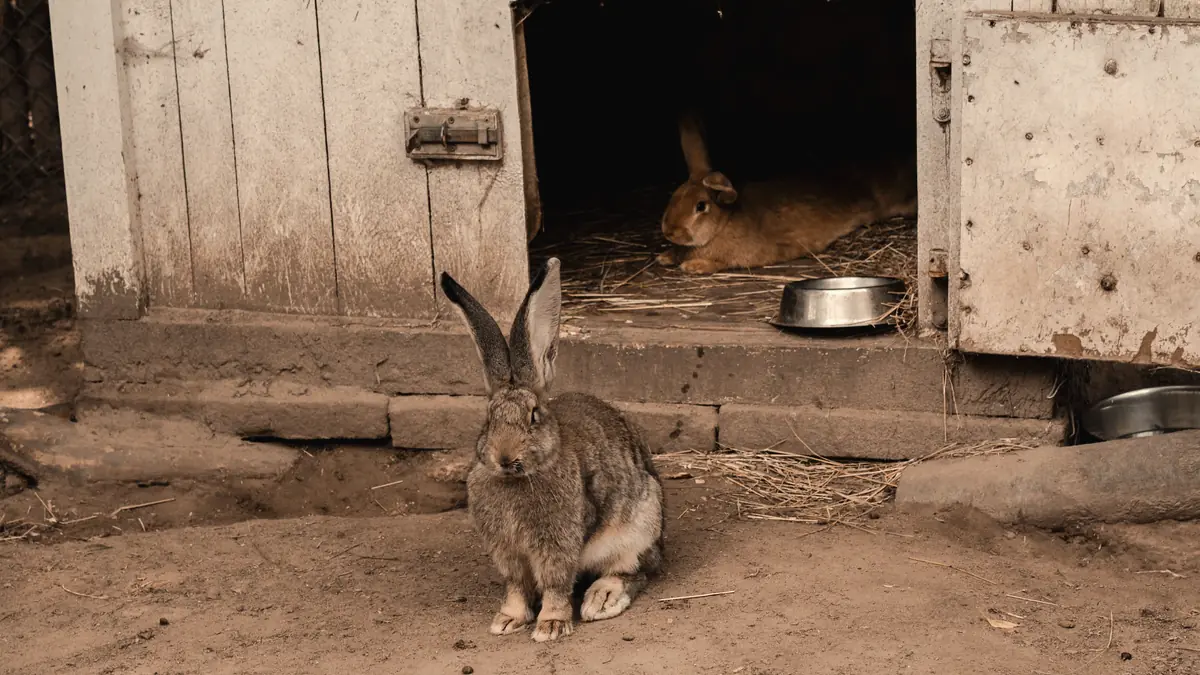
A rabbitry is a calendar with animals attached.
Gestation is about 31 days, and it does not negotiate. Which means the entire chain — nest box in, kindling, weaning, the next breeding — follows from one number: the date you put the doe in with the buck. Get that date on paper and every other date calculates itself. Keep it in your head and you will be the person standing at a hutch on a Tuesday wondering whether it has been four weeks or five.
I have been that person. It is how you end up with a doe kindling on wire because the nest box was two days late.
The chain, from one date
Counting from breeding day as day 0:
Day 0 — bred. Write the doe, the buck, and the date. The buck matters as much as the doe and is the half people fail to record.
Day 10–14 — palpate, if you palpate. Note the result either way, including “unsure” — an honest unsure is more useful later than a confident guess.
Day 28 — nest box in. Clean, dry bedding. This is the deadline that actually bites, because it is the one where being late has a consequence you cannot undo.
Day ~31 — kindled. Record the date, the number born, and the number born alive. Those are two different numbers and keeping them separate is what makes a doe’s record meaningful.
Day 31 + about 3 weeks — kits start leaving the nest and eating solid feed.
Week 6–8 — weaning, depending on how you run it. Record the number weaned, which is the third number that matters.
Three numbers per litter, not one
Born, born alive, weaned.
A doe who consistently produces large litters but weans few is a different animal from one who produces moderate litters and weans nearly all of them, and on a single “litter size” column those two look similar. Over a couple of years those three numbers are what tell you which does earn their feed — and that is the decision the whole record exists to support.
Add the doe’s condition and behaviour in a few words: whether she pulled fur properly, whether she was a good mother, whether the nest was tidy or scattered. Those are not sentimental notes. A doe who does not pull fur is a doe whose next litter needs closer watching in cold weather.
Pedigree is a record, not a formality
The reason to keep pedigree straight is not showing. It is that in year three you will want to know why a particular line does well, and whether the two animals you are about to breed are more closely related than you intended.
That only works if every animal has an identifier and the sire and dam are written at birth. Retro-fitting a pedigree from memory is not possible, and this is the single record that cannot be reconstructed later.
Per litter
- Doe and buck, both identified, and the breeding date
- The calculated dates — nest box, expected kindling — written the same day
- Kindled date · born · born alive · weaned
- Doe’s mothering in a few words, and anything that went wrong
- Where the kits went — kept, sold, processed — so the line stays traceable
Why spring is the moment to start
Spring litters have the whole warm season in front of them, so this is when a rabbitry generates most of its records. It is also when the schedule is busiest and most likely to slip — several does at different points in the cycle, all needing something on a different day.
That is precisely the condition under which memory fails and paper doesn’t.
Rabbit Ledger is built for this — breeding and kindling pages with the calculated dates already ruled, plus the pedigree pages behind them so the lines stay straight without a separate system.
On welfare
Everything above is scheduling and record-keeping. For questions about housing, feeding rates, heat stress or health, the right sources are a vet who sees rabbits and your national or regional rabbit breeders’ association — not an article, and not a forum. A good record makes their help much more useful, because you will be able to say exactly what happened and when.
This week
If you have does bred this spring, sit down with a calendar and write the forward dates for each one now, in one go. Nest box dates especially.
It takes ten minutes and it removes the entire category of mistake that comes from counting weeks on your fingers at the hutch.
— Hadley
Common questions
- How long is rabbit gestation?
- Around 31 days, commonly quoted as 28 to 35. Because the window is narrow and fixed, the whole schedule can be worked out from the breeding date alone.
- When should the nest box go in?
- Most keepers put it in around day 28, a few days before the expected kindling date. Too early and it becomes a litter box; too late and the doe may kindle on the wire.
- What records matter most in a rabbitry?
- Breeding date, kindling date, litter size born and weaned, and the pedigree behind each animal. Those four answer nearly every decision you will make about who to keep.

What I Actually Write Down Every September
One keeper's September logging day: the eight things worth recording before the season closes, and why most of them are failures.
Read the article →
What a 104-Page Field Journal Actually Looks Like Inside
Not a diary, not a planner — a working ledger. A page-by-page tour of what's inside a Steading Codex field journal and why it's built that way.
Read the article →
Why Your Homestead Needs a Paper Ledger (Not Another App)
Apps die, batteries die, subscriptions lapse. A paper field journal survives rain, mud, and a decade on the shelf. Here's why working homesteads still run on ink.
Read the article →