What a 104-Page Field Journal Actually Looks Like Inside
Not a diary, not a planner — a working ledger. A page-by-page tour of what's inside a Steading Codex field journal and why it's built that way.

“Field journal” gets used for everything from leather-bound diaries to bird-watching sketchbooks, so a fair question keeps landing in my inbox: what’s actually on the pages?
Here’s the honest tour, using Soil Soul as the example — the structure repeats across all fifteen volumes, tuned per subject.
The opening: reference, not pep talk
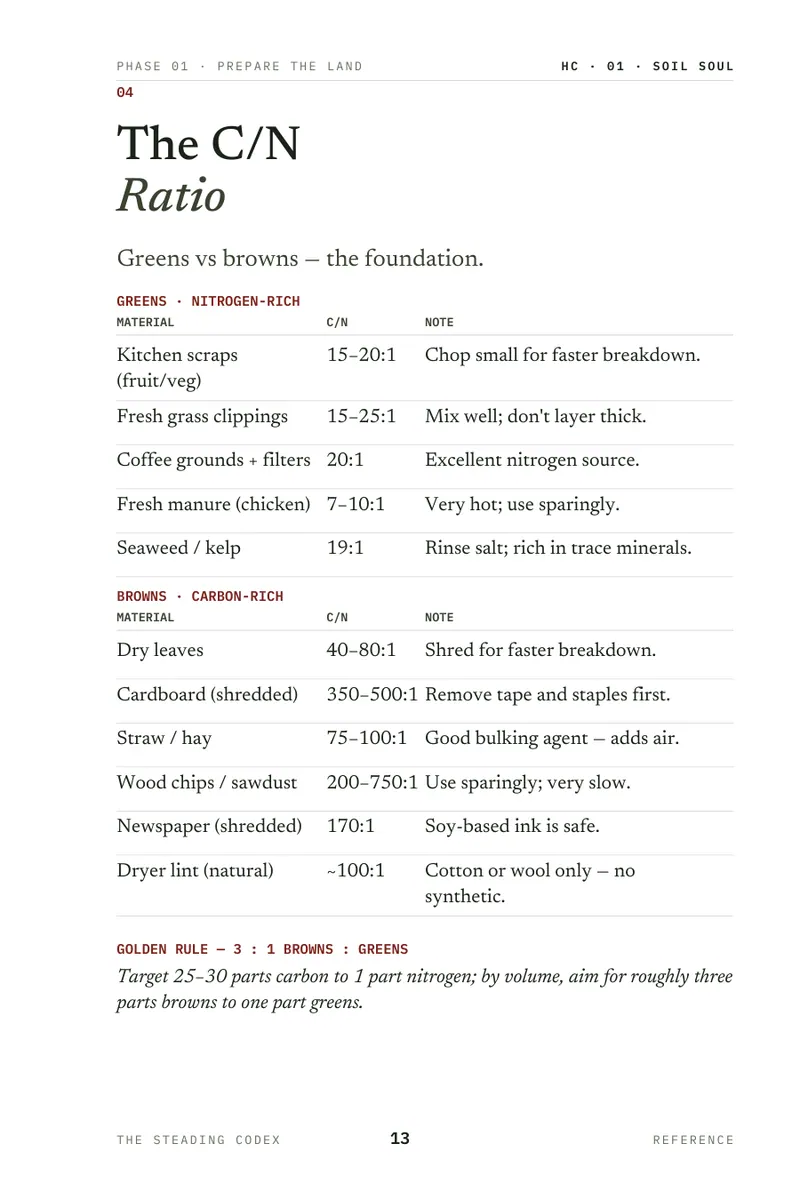
The first pages are the reference deck — the charts you otherwise re-Google every season with muddy thumbs: amendment rates, temperature ranges, timing windows for the subject at hand. In Hive Heartbeat it’s inspection intervals and seasonal treatment windows; in Smoke & Salt it’s the salt-equilibrium math tables. Printed once, next to where you work, forever.
No quotes about believing in yourself. The land doesn’t care, and the pages are too valuable.
The spine: the logs (about 80 of the 104 pages)
The bulk is ruled, structured log pages — the working ledger. Every column pre-named, every unit pre-chosen, because a blank page at 6 a.m. is a page that stays blank.
A Soil Soul log row: date · bed/zone · action (turn, amend, test, water) · reading · next check. A Rabbit Ledger spread runs deeper — doe, buck, kindling dates, kit counts, weights by week — because bloodlines are data. The design rule across all volumes: one event, one row, under a minute. Habit-sized.
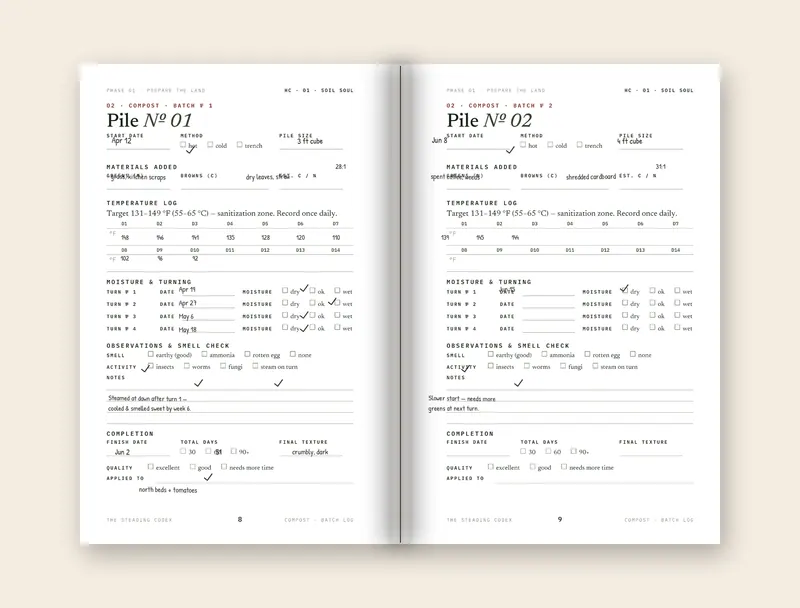
The logs are why these are ledgers and not workbooks: a workbook you finish once; a ledger you run, and its value compounds — year two is when your own pages start out-advising the internet, because they’re about your soil, your hive, your pantry.
The closing: season reviews
Last pages: end-of-season review spreads — totals, what worked, what to never repeat, notes-to-next-year. The ten minutes in November that make next March intelligent. This is also where the loop shows up in print: the Steward volumes’ reviews literally hand their outputs to the Prepare volumes’ opening pages.
The object itself
6×9 inches — big enough for real columns, small enough for a jacket pocket or the shelf by the door. Interiors black-and-white by design: it’s a tool, printed to be scribbled in, splashed, and reprinted next year, not preserved. Paperback ($15.99) for the potting bench; hardcover ($26.99) for the volumes that live indoors and get gifted; digital PDF ($9.99) if you want to print field pages five at a time and burn through them guilt-free.
See it before you buy it
Don’t take my word — the Free Starter Pack is twenty real pages sampled from five volumes, exactly as printed. Print them, use them for a week, and you’ll know precisely whether this system fits your hands.
If it does: the full collection is here — fifteen volumes, five phases, filterable by where your homestead actually is. And if you don’t know your phase, the quiz will tell you in a minute.
The books are the work. Now you know what the work looks like on the page.
— Hadley
What I Actually Write Down Every September
One keeper's September logging day: the eight things worth recording before the season closes, and why most of them are failures.
Read the article →
Why Your Homestead Needs a Paper Ledger (Not Another App)
Apps die, batteries die, subscriptions lapse. A paper field journal survives rain, mud, and a decade on the shelf. Here's why working homesteads still run on ink.
Read the article →
The Spring Kindling Schedule, Written Down
A rabbitry runs on dates: bred, palpated, nest box in, kindled, weaned. Keep them on paper and the year plans itself; keep them in your head and it doesn't.
Read the article →