Curing Garlic and Onions So They Keep
Most storage losses happen in the fortnight after lifting, not in the cellar. When to lift, how to cure alliums, then trim, sort and store.
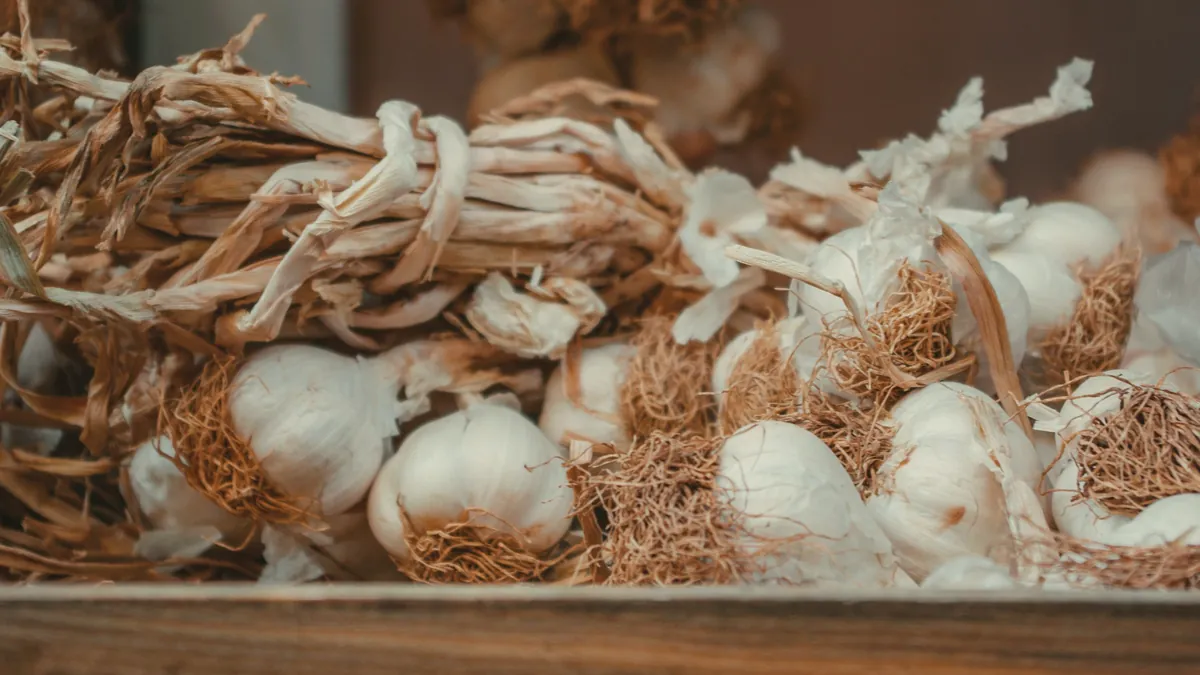
A bad garlic year usually happens in the first fortnight after lifting, not in the cellar in January.
The bulbs come out of the ground looking fine. They go into a crate or a corner of the shed, or they sit in a heap because it rained and there was no time. And then some months later half of them are soft, and the conclusion is that the variety does not store well, or the cellar is wrong, or it was a bad season.
Usually it was the fortnight. Curing is the step that converts a fresh bulb into a storable one, and it is the step most easily skipped because the bulbs look perfectly good without it.
What curing actually does
It dries the outer layers and the neck into a sealed, papery barrier, and it lets the bulb’s surface wounds close.
That barrier is what keeps moisture in and rot organisms out for months. An uncured bulb has a green, moist neck — an open channel straight into the centre. It will keep for weeks. It will not keep for a winter.
Lifting at the right moment
Garlic is commonly lifted when roughly a third to a half of the leaves have browned. The leaves correspond to the wrapper layers, so waiting until everything is brown means the wrappers have already begun to break down in the soil, and split wrappers do not store. Too early and the bulb has not sized up.
Onions are ready when the tops fall over naturally and the necks soften. Let most of the bed go over on its own rather than bending them; forcing it does not improve the outcome.
Lift gently with a fork, well clear of the bulbs, and do not knock the soil off hard. Bruising is invisible now and is exactly where the rot starts in December. Brush loose soil off with your hand and leave the rest — it comes off easily once cured.
The cure itself
Three requirements, and the third is the one people get wrong.
Warm. Ordinary summer warmth is fine.
Airy. This is the real requirement. Moving air on all sides — hung in bunches, laid on a rack or a slatted bench, spread on mesh. Not in a solid crate, not in a heap, not in a bucket.
Shaded. Airflow yes, direct sun no. Sun scalds the outer layers, and scalded tissue is damaged tissue.
Leave the tops on while curing; they carry moisture out of the bulb. Two to four weeks, and the test is mechanical rather than calendar-based: the neck is dry and tight, and the outer wrappers rustle. A neck that still feels soft or cool is not done.
Then trim, sort and store
Once cured: trim roots to about a centimetre, cut tops down to an inch or two — or braid, which is genuinely practical as well as decorative because it keeps air moving.
Then sort ruthlessly. Anything soft, bruised, split-wrappered or with a thick neck goes into the eat-first basket for the kitchen, not into storage. One rotting bulb in a crate takes its neighbours with it, and the sort is the cheapest insurance there is.
Store cool, dark and dry with air movement. Not sealed, not in plastic, not in the fridge.
The record that explains a bad year
Per crop, per year
- Variety, planting date, and lifting date
- Leaf condition when lifted — the judgement call, recorded
- Curing conditions and how long — including the weather across it
- How many stored, and how many sorted out at the start
- Come spring: how many were still sound, and when losses began
That last line, written in March, is what closes the loop. Two years of it and you can tell whether the variety is the problem, whether the wet cure in the year it rained cost you, and how long your storage actually holds — which is the number that decides how much to plant.
Without it, a poor storage year is a mystery every time, and the same mystery each time.
The Harvest Vault has the storage pages for exactly this — what went in, in what condition, and what came back out — alongside the inventory. The free Inventory & Loop Log covers the count on one page.
This month
If the tops are going over, lift on a dry day and get them onto a rack with air on all sides before you do anything else with them.
Then leave them alone for a fortnight and check the necks, not the calendar.
— Hadley
Common questions
- How long does garlic need to cure?
- Usually two to four weeks in a warm, airy, shaded place. It is cured when the neck is dry and tight and the outer wrappers rustle — time is a guide, the neck is the test.
- When should garlic be harvested?
- Commonly when about a third to a half of the leaves have browned. Left too long the wrappers split in the ground, and split wrappers do not store.
- Can alliums be cured in the sun?
- Airflow yes, direct sun no. Sun scalds the outer layers and the damaged tissue is exactly where rot starts in storage.
The Pre-Winter Pantry Count (Do It Before You Need It)
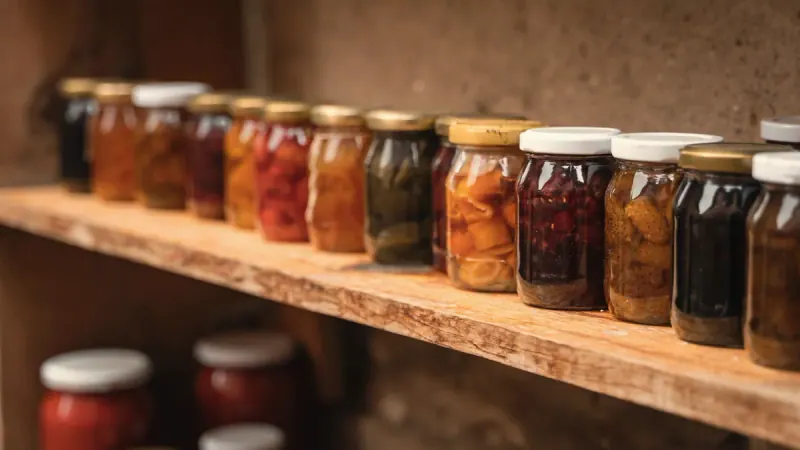
An inventory taken in October is true; one taken in January is done by lamplight and wrong. How to count a pantry, and the four numbers.
Read the article →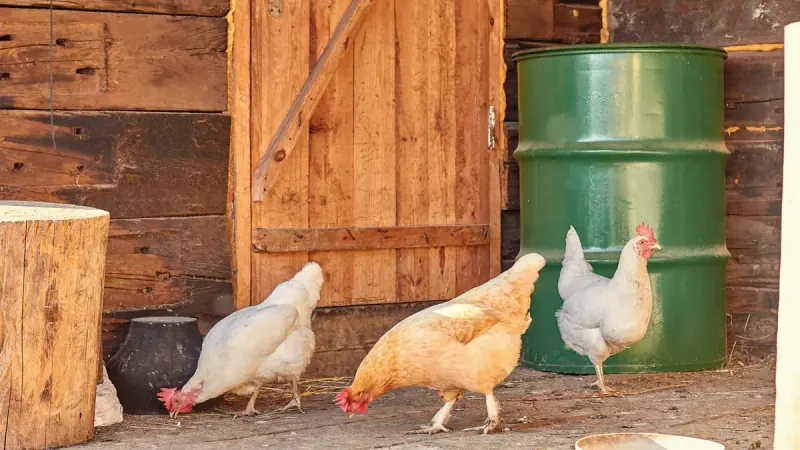
Getting Chickens Ready for Winter: Molt, Light, Records
September is molt season — the worst time to make winter decisions from memory. What molt looks like, the real pre-winter jobs, and the light question.
Read the article →
The Fall Cleanup That Feeds Next Year's Compost
Most autumn cleanup throws away the year's best compost. How to sort beds into browns, greens and burn-pile while you clear them.
Read the article →