Hardening Off: The Week That Saves Your Seedlings
Seedlings raised indoors die outdoors from light, wind and swing — not cold. The three things that kill them, and the seven-day schedule that doesn't.
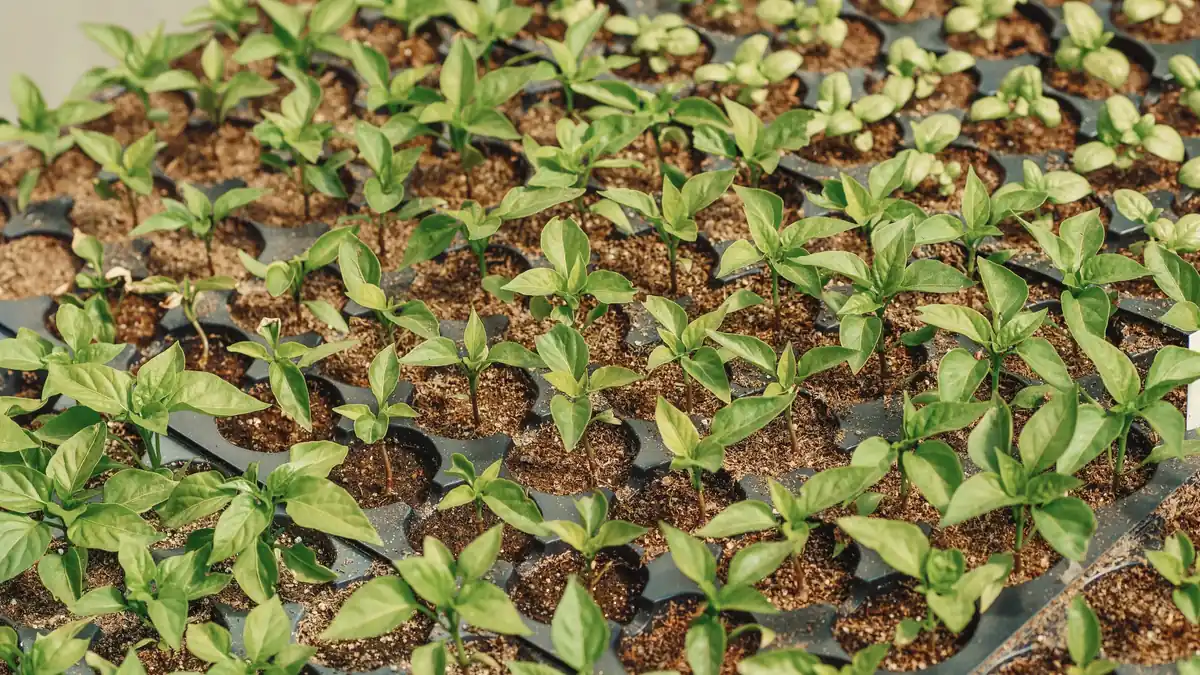
Every April a batch of perfectly good seedlings gets carried outside on a nice Saturday, planted with care, watered in — and is dead or checked by Wednesday. The gardener concludes it got too cold.
It usually didn’t. It got too much light, too much wind, and too much change at once.
A seedling raised under a shop light or on a windowsill has spent its whole life in conditions that do not exist outdoors. The light it has known is a small fraction of full sun. The air has never moved. The temperature has never swung more than a few degrees. Then it is set down in a bed where all three change by an order of magnitude in one afternoon.
Hardening off is just the process of making that change gradual. It takes a week, it is boring, and it is the difference between planting out and replanting out.
The three things that actually kill them
Light, not cold. Full sun delivers many times the intensity of an indoor setup. Leaves that developed under low light have thin cuticles and cannot cope; they bleach white or go papery within hours. That is sunburn, and it is permanent on the leaf it happens to.
Wind, not chill. A stem that has never been moved has no reason to have built stiffness into itself. Outdoors it flexes for the first time and snaps at the soil line, or it stays intact but spends its energy on staying upright rather than growing.
Swing, not the low. A plant that sat at a steady 68°F now goes from 40°F at dawn to 75°F at noon. The low is survivable; the daily whipsaw is what stalls growth.
Notice all three are about transition, not about the destination. The bed is fine. The trip is what needs managing.
The seven-day schedule
Shade means bright but indirect — the north side of a building, under a bench, beneath a tree not yet leafed out. Not deep shade, and not full sun.
Day 1–2. Outside for two to three hours, full shade, sheltered from wind. Back in for the night.
Day 3–4. Four to five hours, with one hour of gentle morning sun. Still in overnight.
Day 5–6. Most of the day out, including two or three hours of direct sun. If the night is forecast above about 50°F for warm-season plants, leave them out — otherwise bring them in.
Day 7. Full day, full sun, out overnight.
Day 8. Plant, and do it on a cloudy afternoon or in the evening rather than at midday.
The parts people get wrong
Starting on a bright still day. It feels kind. It is the worst possible first day — the highest light of the week with no cloud to soften it. Start on an overcast one and let the weather do the shading.
Concrete and gravel. A patio bakes and reflects, so seedlings set on it get sun from above and below and dry out in an hour. Put them on soil, grass or a slatted bench.
Forgetting them. The single most common loss. Trays left out during an unexpected squall, or left in sun while you ran an errand. Set a timer for the first few days; it is not a failure of memory, it is a failure of scheduling.
Treating everything the same. Brassicas and lettuce harden fast and tolerate cold. Tomatoes, peppers, cucumbers and squash want the full week and a warm bed. Run them as separate groups rather than one queue.
The lines that make next April easier
Four things, once per batch:
Per tray, during the week
- What it is and when you sowed it — so you can judge whether it was the right size to go out
- Dates hardening started and finished, plus the weather across those days
- Date planted out, and the bed
- Losses, with a cause if you have one — “wind, day 4, unsheltered” beats “some died”
The value shows in year two. You will find that your own last-frost date is not the chart’s, that the tomatoes always want an extra three days, and that the west bench is a wind tunnel in April. None of that is knowable from one season, and none of it survives in memory.
Vertex Green is ruled for the tray-by-tray side of this — sowing dates, germination, hardening and transplant, one line per batch. The free Sowing & Harvest Log covers the same on a single printable page if you want to try the habit first.
This week
If your seedlings are up and the bed is nearly ready, start the shade days now rather than the week you intend to plant. The schedule only works if it runs before the planting date you have in mind, and every April somebody discovers that on the Saturday.
Seven boring days. Then plant, on a cloudy evening, into ground you have already watered.
— Hadley
Common questions
- How long does hardening off take?
- Seven to ten days for most seedlings. Shorter than a week and you are gambling; much longer and the plants sit root-bound in their cells losing vigour.
- What temperature is safe to harden off in?
- Work above about 50°F for warm-season plants and above 45°F for hardy ones, and bring everything in overnight until the last few days. Wind matters more than the thermometer.
- Why did my seedlings die after transplanting?
- Most often sunscald or wind, not cold. Indoor light is a fraction of full sun, and a stem that has never been moved has no stiffness in it. Both are fixed by a gradual introduction rather than a single move.
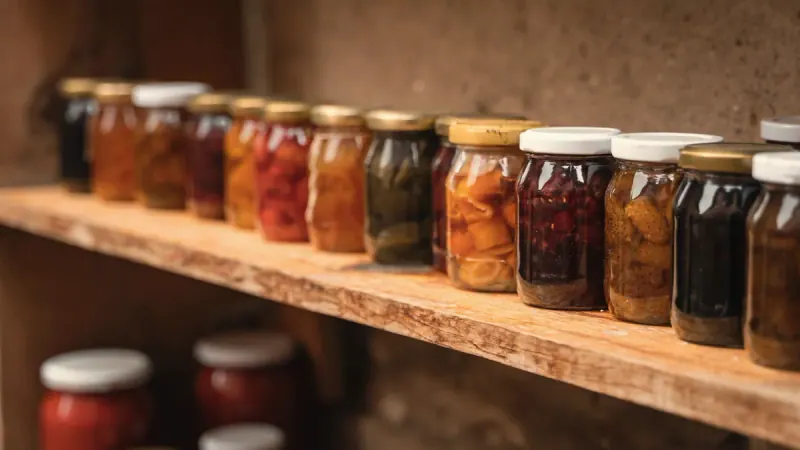
The Pre-Winter Pantry Count (Do It Before You Need It)
An inventory taken in October is true; one taken in January is done by lamplight and wrong. How to count a pantry, and the four numbers.
Read the article →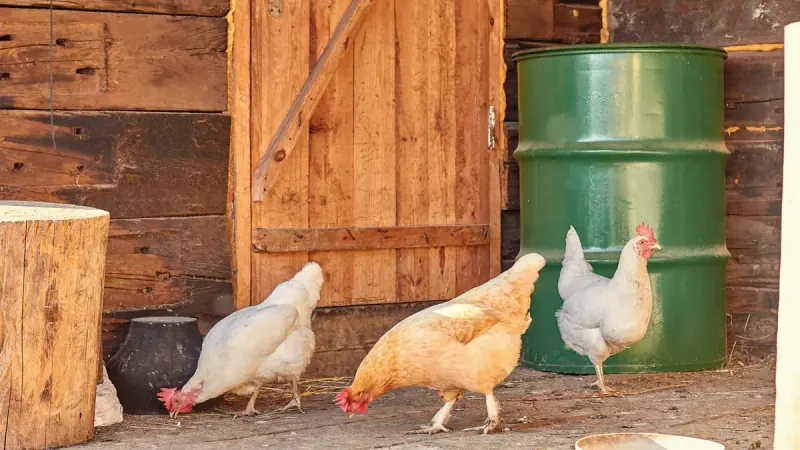
Getting Chickens Ready for Winter: Molt, Light, Records
September is molt season — the worst time to make winter decisions from memory. What molt looks like, the real pre-winter jobs, and the light question.
Read the article →
The Fall Cleanup That Feeds Next Year's Compost
Most autumn cleanup throws away the year's best compost. How to sort beds into browns, greens and burn-pile while you clear them.
Read the article →