What Is Biochar? The Ancient Soil Amendment Modern Gardens Are Rediscovering
Biochar explained — what it is, how it works in soil, how to make it safely at home, charging protocols, and why the Amazonian terra preta civilizations buried it 2,000 years ago.
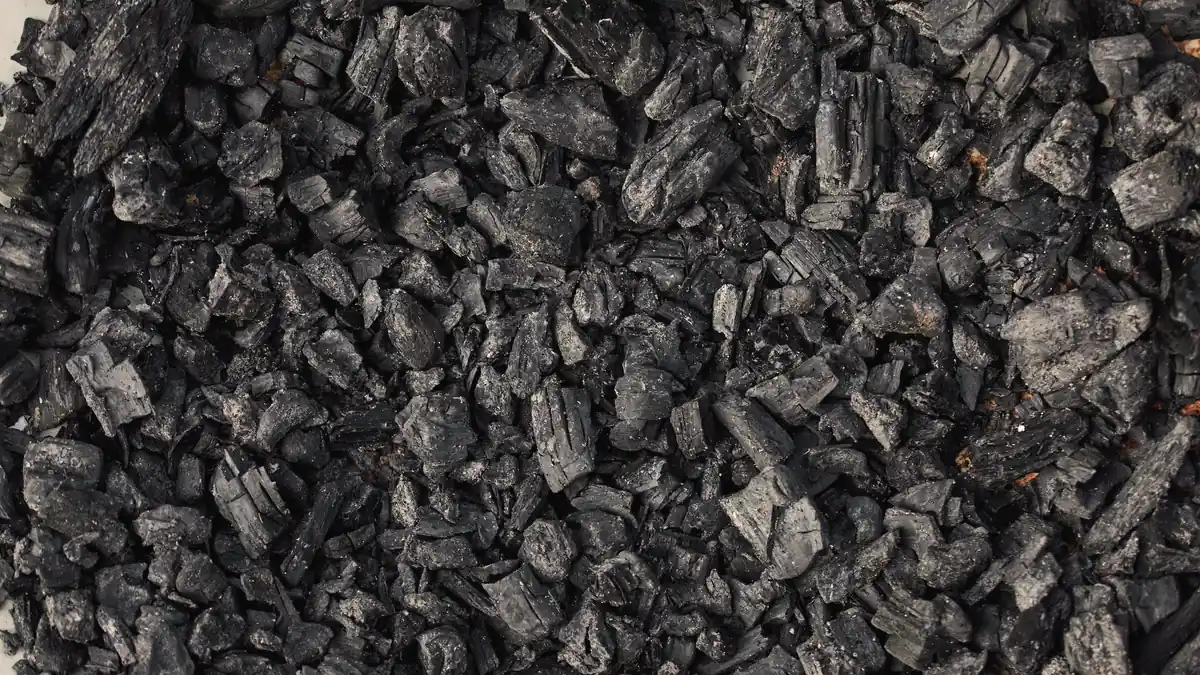
Biochar is the most-discussed and least-understood soil amendment in the modern garden. It looks like charcoal. It smells like charcoal. It is, in fact, a specific kind of charcoal — but the difference between charcoal-for-grilling and biochar-for-soil is the difference between a hand grenade and a battery. One releases energy fast. The other stores it for centuries.
This is an explainer for the keeper who’s heard the word, seen the bag at the garden store, and wants to know: what is it, does it work, can I make it, and what does “charging” mean?
Charcoal-for-grilling releases its energy in an afternoon. Biochar-for-soil holds it for centuries.
The 30-second answer
Biochar is stable, porous carbon produced by burning organic matter in a low-oxygen environment (pyrolysis). When applied to soil, it creates microscopic habitat for microbes, holds water like a sponge, and binds soil nutrients so they don’t leach away.
It is the carbon backbone of terra preta — the famously fertile dark earths of the Amazon, created by pre-Columbian civilizations over 2,000 years ago, still fertile today.
The longer answer: pyrolysis vs. combustion
Burn wood in open air and you get carbon dioxide, heat, ash, and a tiny bit of leftover charcoal. The fire consumed most of the carbon.
Burn wood in a sealed or oxygen-limited chamber and the wood pyrolyzes — it decomposes thermally without combusting. The volatile gases burn off (or are captured as syngas and bio-oil); the solid residue is biochar. By weight, you keep about a third of the original biomass, but it’s almost pure stable carbon, with a microstructure of millions of microscopic pores per gram.
That porosity is the magic.
Why porosity matters in soil
Soil microbes — bacteria, fungi, archaea — are the gut microbiome of the plant world. They mineralize nutrients, fix nitrogen, suppress pathogens, and communicate with plant roots via mycorrhizal networks. They need habitat — physical pores where they can colonize, hide from predators, and live undisturbed.
A gram of high-quality biochar offers roughly 300–400 square meters of internal surface area. That’s a New York City apartment’s worth of microbial habitat in a teaspoon of black grit.
Biochar also has high cation exchange capacity (CEC), meaning it holds positively charged nutrients — calcium, magnesium, potassium, ammonium — and releases them to roots gradually instead of letting them leach away in the next rain.
In sandy soils, this fixes the worst problem (nothing holds anything). In clay soils, the structural porosity loosens compaction. In any soil, it banks carbon for centuries — biochar in soil is, conservatively, a 100-to-500-year carbon storage method.
The hidden gotcha: raw biochar steals nitrogen
Here’s what most beginner guides skip: freshly made biochar is a nutrient sponge. Apply raw, dry biochar to a garden bed and it will absorb soil nitrogen aggressively for the first 6–12 months while it equilibrates. Your plants will be chlorotic and stunted. You’ll think biochar is a scam.
This is why you charge biochar before applying.
Charging biochar — the six methods
Charging means pre-loading the biochar’s porous structure with nutrients and microbes before it goes in soil. There are six common methods, ranked by speed and quality:
- Compost-blend (slow, gold-standard): Mix raw biochar 1:4 into an active compost pile. Let it cycle through one full thermophilic phase (~60 days). Result: fully colonized, fully charged.
- Manure-soak (medium, free): Soak biochar in a 1:1 slurry of aged chicken or rabbit manure and water for 7–14 days. Drain, apply.
- Compost-tea inoculation (medium): Brew an aerated compost tea and soak biochar in it for 48 hours. Apply moist.
- Urine-charge (fast, free, weirdly effective): Soak biochar in diluted urine (1:5) for 7 days. Yes, it works. Yes, it smells. Nitrogen-rich, microbially active.
- Liquid fertilizer soak (fast, costs money): Soak biochar in a dilute organic liquid fertilizer (fish emulsion, kelp) for 48–72 hours.
- In-soil charge (slowest, easiest): Apply raw biochar in fall, let winter rains + soil biology charge it in place over 6–12 months. Don’t plant in that zone the first season.
The Biochar Index maps these six methods against feedstock type, climate, and target growing system, with a 6-month soil observation tracker per batch.
How to make biochar at home
The simplest home method is the inverted-bucket retort. Drill ventilation holes in a sealed metal bucket. Pack with hardwood scraps, sawdust, corn cobs, walnut shells. Invert inside a larger fire pit. Build a fire around the bucket. The biomass inside pyrolizes; the off-gases escape through holes and feed the outer fire. Two to four hours later, you have a bucket of black, brittle, glittery biochar.
Better methods exist — TLUD (top-lit updraft) gasifiers, Kon-Tiki cone kilns, retort furnaces — but the inverted-bucket is a $20 starting point. Yield: about 2-3 gallons of biochar per 5-gallon load of feedstock.
Safety: pyrolysis produces carbon monoxide and tar smoke. Burn outdoors, away from structures, downwind, never inside. Quench finished biochar with water before storing — residual hot spots can smolder for hours.
Application rates
Biochar is not fertilizer. It’s habitat infrastructure. Application rates are once-or-rare, not annual:
- Vegetable beds: 5–10% by volume in the top 6 inches of soil, single application, recharged biennially.
- Container mixes: 5% by volume, mixed in at potting.
- Fruit trees: 1 gallon of charged biochar in the planting hole, never to be reapplied.
- Lawns: Top-dress at ¼ inch, water in, once per decade.
Over-application is rare but possible. Above 30% biochar by volume, soils become too porous, dry out quickly, and lose contact with roots.
Does it actually work?
There is now over a decade of peer-reviewed research on biochar in temperate gardens. The summary: when properly charged and matched to soil type, biochar reliably improves water retention, reduces nutrient leaching, increases microbial biomass, and yields modest but real productivity gains (5–25% in most studies).
It is not a miracle. It is a long-duration, low-maintenance infrastructure investment for the working homestead. The cost is one weekend of kiln firing per year. The payoff is decades.
The bottom line
Make a batch this fall. Charge it through your winter compost pile. Apply it in spring. Take soil tests at month 0, month 3, and month 6. Compare to an untreated control bed.
By the end of one season, you’ll know whether your specific soil, climate, and feedstock combination benefits — and by how much. After three seasons, you’ll have a baseline you can scale.
That’s what The Biochar Index is built for: 50 batch logs covering feedstock, pyrolysis curve, charging method, application rate, and 6-month outcomes — the data your future self will want when you’re deciding whether to fire the kiln again.
Burn it slow. Charge it deep. Write it down.

The Winter Storm Kit Checklist (and the Three Things That Expired Since Last Year)
A winter kit built once is a kit that quietly goes stale. The checklist for a house kit, a car kit and a power-out box — and the three items that are almost always expired by now.
Read the article →
Seed Saving and the Inventory You Do in October
Saving seed is the easy half. Knowing what you have, and whether it will still come up, is what decides next spring's order.
Read the article →
Why Homestead Gifts Get Ordered in October
The good presents for people who keep land get bought early — useful things sell out and personal ones take time. A calm October list.
Read the article →