How to Start Composting: The Complete Beginner Guide
A practical, field-tested guide to starting your first compost pile — feedstock ratios, pile geometry, temperature curves, troubleshooting, and the seven mistakes that ruin most first piles.
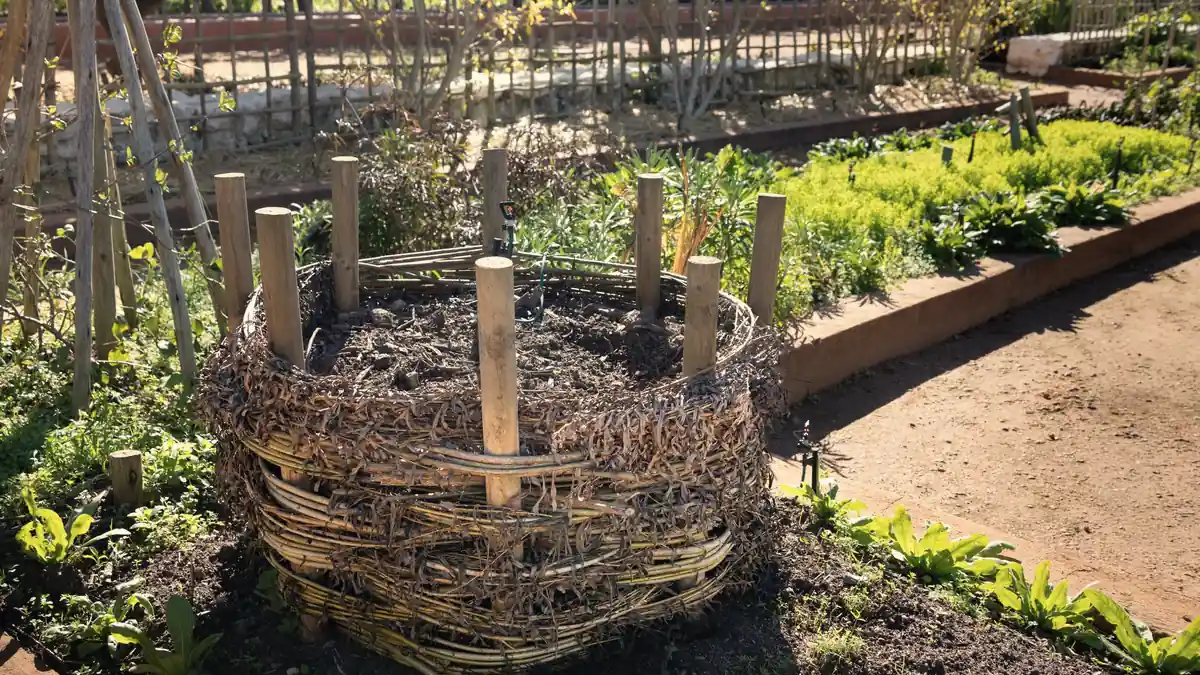
If you’re starting compost for the first time, the entire internet will tell you the same five things — “browns and greens,” “turn it once a week,” “keep it moist as a wrung-out sponge.” None of that is wrong. None of it is enough.
What’s missing is the measurement loop: the temperature curve that tells you whether your pile is actually working, the C:N ratio that determines whether it ever will, and the eighty-day calendar that converts kitchen scraps into garden-ready humus. This is a complete beginner’s guide built from one season of field notes, written for the keeper who wants their first pile to finish on schedule.
Why most first compost piles fail
The number-one reason first piles stall isn’t moisture or oxygen — it’s mass. A pile under one cubic yard (about a meter on each side) cannot generate or hold enough heat to drive thermophilic decomposition. It will rot, slowly, like a pile of leaves in a hedgerow. That’s not compost. That’s leaf litter.
The second reason is ratio. The carbon-to-nitrogen ratio of your feedstock determines whether the pile heats or stinks. The sweet spot is roughly 30:1 — about three parts “brown” (dry leaves, straw, cardboard, shredded paper) to one part “green” (kitchen scraps, grass clippings, manure, coffee grounds). Most beginner piles run nitrogen-heavy because the food scraps go in daily and the brown material is “I’ll grab some leaves this weekend.” Result: a wet, stinky, anaerobic pile that attracts flies.
The third reason is abandonment. A working pile gets turned. Turning aerates, redistributes moisture, and re-exposes outer material to the hot core. A pile that’s never turned will compost — eventually — but it will take a year, not three months.
Solve those three and you have compost. Don’t, and you have a weed pile.
The seven things you actually need
- A 1m × 1m × 1m space — open ground or a three-sided bin. Wire mesh works. Pallets work. Bare ground is fine if your dog doesn’t dig.
- A stock of browns — a bag of dry leaves, a bale of straw, or several sheets of shredded corrugated cardboard. You will use more than you expect.
- A nitrogen source — kitchen scraps (vegetables, coffee grounds, eggshells, no meat or dairy), fresh grass clippings, or aged manure (chicken, rabbit, horse, cow).
- A pitchfork — not a shovel. A four-tined garden fork.
- A thermometer — a compost thermometer with a 20-inch probe is $25 and the single highest-leverage tool in this entire guide.
- Water — for hose access. You’ll need to dampen browns when the pile is too dry.
- A logbook. This is non-negotiable. The pile is a slow experiment; you cannot reason about it from memory. (Soil Soul gives you a 40-pile log with temperature columns; any blank notebook works for pile #1.)
Building the pile, layer by layer
Build in layers, then mix once on day two.
- Base (4 inches): Coarse brown material. Twigs, hay, ripped cardboard. This layer prevents anaerobic compaction at the bottom.
- Layer 1 (4 inches greens): Kitchen scraps, fresh grass, manure.
- Layer 2 (4 inches browns): Shredded leaves, straw, dry plant matter.
- Sprinkle (handful): Soil from the garden. This inoculates the pile with native microbes.
- Repeat until the pile is at least one cubic yard.
- Cap (2 inches browns). Keeps fruit flies and rodents from the food layer.
Water as you build. The pile should feel like a wrung-out sponge — damp throughout, but you can’t squeeze water out of a handful. Too dry: decomposition stalls. Too wet: anaerobic, smelly.
On day two, fork it once, top to bottom, mixing layers. This is the only time you’ll mix the layers; from this point on, turning is about aeration, not blending.
The temperature curve
Here’s what a working pile does. Stick the thermometer 12 inches in, log the temperature daily for the first three weeks:
- Day 1–3 (mesophilic, 50–105°F): Bacteria warm up. You may see steam in the morning.
- Day 3–10 (thermophilic, 130–160°F): Peak heat. This is where pathogens and weed seeds die. Hold this range for at least 14 days for a sanitary pile.
- Day 10–21 (cooling, 100–130°F): Heat tapers. Turn the pile when it drops below 120°F to re-energize the thermophilic phase.
- Day 21–60 (curing): Pile drops to ambient. Worms and fungi take over. Cure for at least 30 days before garden use.
If your pile never breaks 100°F, the problem is one of: too small (add mass), too dry (water it), too brown (add greens), too compacted (turn it).
If your pile goes anaerobic (smells like ammonia or sewage), the problem is one of: too wet (add browns, fluff), too much nitrogen (add browns), too compacted (fork it).
A pile log with daily temperatures makes all of this diagnosable. Soil Soul standardizes this in a one-page-per-pile format with columns for temp, moisture, action taken, and notes.
Three common pitfalls
- “I’ll just dump scraps and let it go.” This produces leachate, fruit flies, and stink. Always cap kitchen waste with brown material the same day you add it.
- “I’ll turn it once a week.” Fine, but base the turn on temperature, not the calendar. If the pile is still at 150°F, leave it alone. If it dropped to 95°F, turn it tomorrow.
- “I’ll start with a tiny pile, then add more.” Tiny piles never heat. Build to 1 cubic yard first, then maintain.
What “done” looks like
A finished compost pile loses about half its volume, smells like a forest floor (earthy, not sour), and crumbles into dark, granular material with no recognizable scraps except occasional eggshell flakes and avocado pits. Screen it through ¼-inch hardware cloth if you want fine compost for seed-starting; coarse is fine for top-dressing beds.
A 1-cubic-yard pile, well-managed, gives you 12–15 cubic feet of finished compost — enough to top-dress about 200 square feet of bed at 1 inch depth.
After the first pile
Once pile #1 finishes, you’re past the hardest part. The system compounds: pile #2 starts with leftover browns, partial scraps from pile #1, and the inoculated soil under the previous pile. Most working homesteads run a two- or three-pile rotation — one active, one curing, one finished.
That’s where the field journal earns its keep. Pile-by-pile temperature curves let you tune your ratios for your climate, your inputs, and your turning cadence. By season three, you’ll know what your specific stack of brown leaves and chicken-coop bedding does on a 40°F February morning.
That’s what Soil Soul was built for — 40 pile logs, 16 worm-farm entries, 16 soil-health audits, a 7-problem odor troubleshooting key, and a compost-tea brewing log. The slow work of making ground, written down.
Start the pile. Stick the thermometer in. Write the temperatures down. The system does the rest.

The Winter Storm Kit Checklist (and the Three Things That Expired Since Last Year)
A winter kit built once is a kit that quietly goes stale. The checklist for a house kit, a car kit and a power-out box — and the three items that are almost always expired by now.
Read the article →
Seed Saving and the Inventory You Do in October
Saving seed is the easy half. Knowing what you have, and whether it will still come up, is what decides next spring's order.
Read the article →
Why Homestead Gifts Get Ordered in October
The good presents for people who keep land get bought early — useful things sell out and personal ones take time. A calm October list.
Read the article →